


Elephant Hills is Thailand’s first luxury tented jungle camp, set in the rainforest of Khao Sok National Park in the south, with a separate camp, The Bush Camp, in the north about two hours from Chiang Mai. Guests sleep under canvas, drift down the Sok River in a guided canoe and watch elephants that are never ridden, chained or made to perform. In 2026, it was a double winner at the World Luxury Travel Awards, named Best Safari in Asia and Global Winner – Best Luxury Safari Destination.
There are a few things worth knowing before visiting Elephant Hills. Children are welcome from four years old, although overnight stays at the floating Lake Camp start at seven. Stays start from one night, but we recommend at least two to make the most of your visit, and three to four for families who want time for every activity. In Khao Sok, May and June are the recommended months. Meals and activities are included, while drinks, souvenirs and tips are paid for in Thai baht cash. The elephant experience is completely hands-off, so there is no touching or hand-feeding.
This guide reflects what the Elephant Hills team confirmed to Luxtripper in October 2026, cross-checked against the official Elephant Hills website.
Elephant Hills: Camps, Packages and Ages
Elephant Hills operates three camps across two regions, with meals and activities included at each. Which one is best depends on who is travelling and the pace they prefer.
Camp and Setting | Tents and Nights | Children | Best For |
Elephant Camp, Khao Sok (Jungle Safari): rainforest setting in Khao Sok National Park | 66 tents; 1 to 3 nights | From 4 years | Families, active travellers, first-time visitors |
Lake Camp, Cheow Lan Lake (Jungle & Lake Safari): floating tents, combined with the Elephant Camp | 20 floating tents; 2 or 3 nights in total, one of them at the Lake Camp | Overnight from 7 years; under-7s can join the lake day trip | Couples, families with children aged 7+ |
The Bush Camp, Chiang Mai: mountain setting overlooking the Ping River and a plantation | 25 air-conditioned tents, including family rooms; 1 or 2 nights, full board | From 4 years; family rooms sleep five | A slower, more cultural stay in the north |
Jungle Safari
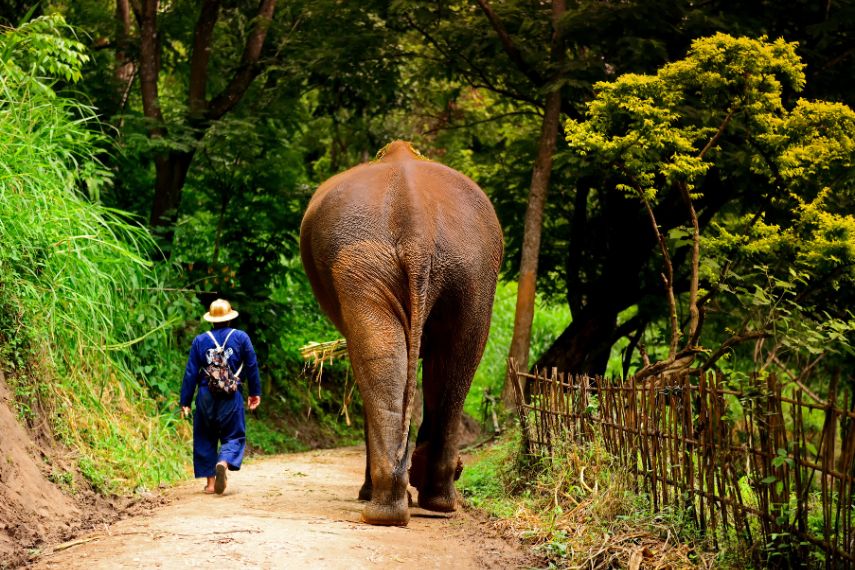
Jungle Safari is based at the Elephant Camp in the forest of Khao Sok, with a pool and a jungle bar on site. The full programme of elephant time, canoeing, jungle trekking and wildlife observation runs from here, which makes it the more active of the two regions and the first choice for families with children aged four and over. Stays run for 2 days / 1 night, 3 days / 2 nights or 4 days / 3 nights, and the 3-day option includes a day trip to Cheow Lan Lake with lunch at the Lake Camp.
Jungle & Lake Safari
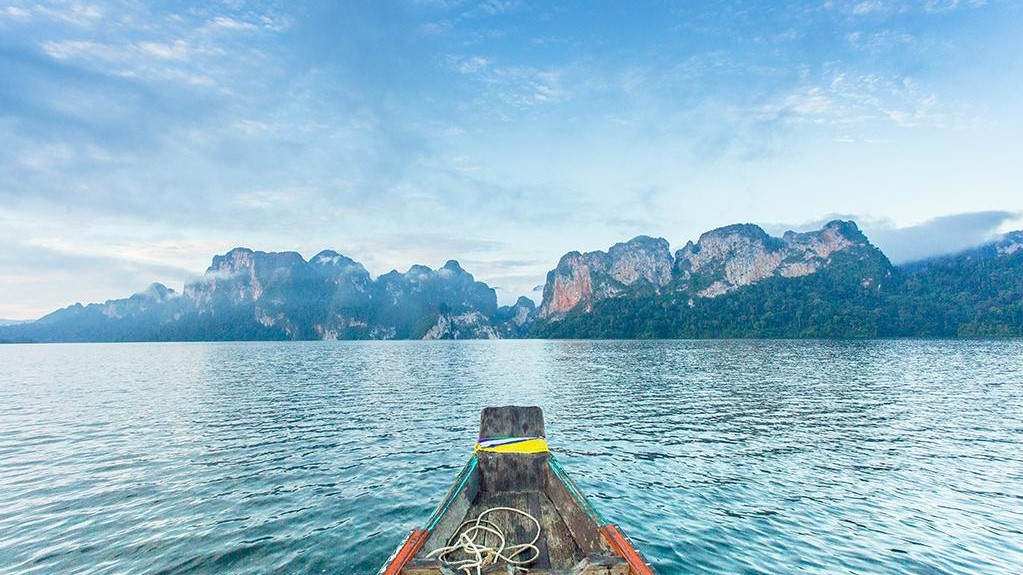
This package adds a night at the Lake Camp on Cheow Lan Lake, where 20 floating tents each come with their own canoe. Stays run for 3 days / 2 nights, with one night at each camp, or 4 days / 3 nights, with two nights at the Elephant Camp, one at the Lake Camp and a day exploring the mangrove swamps. Early morning is the best time to spot wildlife from the water, though sightings can never be guaranteed. There is no phone signal or Wi-Fi, no alcohol is served, and life jackets must be worn whenever guests are in the water. It suits couples and families with children aged seven and over, as younger children cannot stay overnight.
The Bush Camp, Chiang Mai
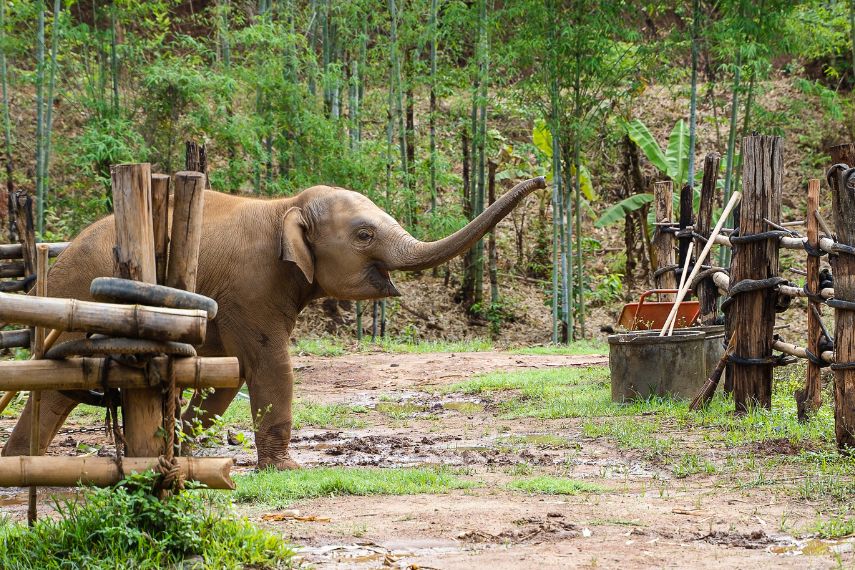
The north offers a slower, more cultural stay. The Bush Camp has grown from 20 to 25 air-conditioned tents, set on a mountain overlooking the Ping River and a plantation, around two hours from Chiang Mai. Family rooms sleep five, two adults and three children. Elephants are part of every day, along with lessons in how they are cared for. Guests also spend time with the local Karen community, making curry paste and coconut milk and removing the husk from rice. An elephant café serves food with a view of the animals, souvenir shops are on site, and cocktails are complimentary during happy hour, from 5:30 pm to 6:30 pm. Children have crafting stations to enjoy. Stays run for 2 days / 1 night or 3 days / 2 nights, full board.
How Many Nights Should You Stay?
Stays at Elephant Hills start from one night, but we recommend at least two to make the most of your visit. Families get the best out of three to four nights, which leaves time for the full programme. If you are short on time, the 2 days / 1 night Jungle Safari still covers the essentials: the elephant experience, a canoe safari on the Sok River and a jungle trek the next morning.
Every package includes tented accommodation, meals, guided activities and shared transfers.
Explore Our Elephant Hills Holiday Deals
Elephant Welfare at Elephant Hills
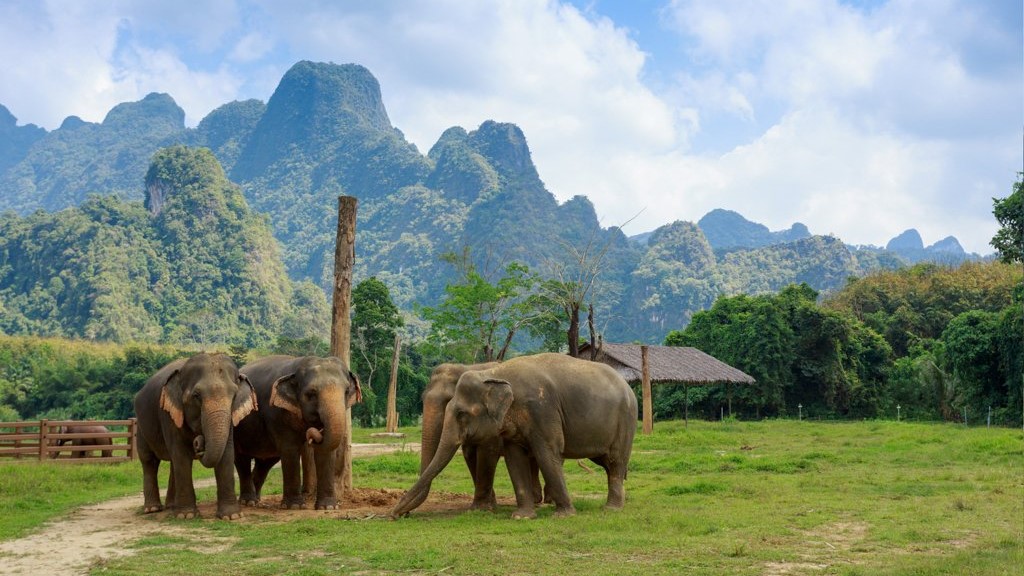
Elephant Hills leads the way in elephant welfare in Thailand. There are no chains, no performances and no rides, and the elephants are never made to take part in anything. They roam freely within their habitat, and the camp grows its own elephant grass on site.
A change arrived on 1 May 2026 at both the Khao Sok camps and The Bush Camp. Guests no longer touch or hand-feed the elephants. They help the team prepare the food instead, and the mahouts deliver the fruit to feeding stations within the elephants’ free-roaming habitat, so each animal eats at its own pace.
What replaces hand-feeding is time to watch. Guests see elephants roaming, grazing, bathing and playing in a mud pool, while guides explain the history and care of each animal. There is no touching, and any interaction happens on the elephants’ own terms, so guests come to watch rather than handle.
Elephant Hills meets 100% of the core criteria in an independent Global Spirit animal welfare audit.
What Are the Elephant Hills Tents and Facilities Like?
At the Khao Sok camps, each tent has a bed, mosquito netting, electricity and an en-suite bathroom with hot and cold running water.
- Elephant Camp: 66 tents in the forest, with 24-hour electricity and free Wi-Fi in the common area.
- Lake Camp: 20 floating tents, each with its own canoe. Life jackets must be worn whenever guests are in the water. Power comes from solar and wind, so hair dryers are not allowed, and there is no Wi-Fi or phone signal. Devices are best charged on the first night at the Elephant Camp.
- The Bush Camp: 25 air-conditioned tents, each with a private balcony and Wi-Fi, alongside an infinity pool overlooking the river.
Tents at both Khao Sok camps fit four people, although the Lake Camp has limited space for extra beds. Staff confirm the arrangements according to ages and availability, and a family of two adults and three children usually takes two tents.
What’s Included at Elephant Hills? Meals, Drinks and Extras
Every package covers tented accommodation, meals, guided activities and shared transfers. Drinks, souvenirs and tips are extras.
Lunch and dinner are Thai buffets, and breakfast is Western-style with eggs cooked to order. Since every dish is prepared on site, all dietary requirements and allergies can be catered for, including vegetarian, vegan and halal meals. Dietary needs should be noted at the time of booking.
Drinks are paid for separately, with one exception at The Bush Camp.
- Elephant Camp: the jungle bar serves soft drinks and alcohol, payable in cash.
- Lake Camp: no alcohol is served, as the camp sits inside the national park.
- The Bush Camp: cocktails are complimentary for one hour, from 5:30 pm to 6:30 pm.
A reusable water bottle is encouraged. Filtered refill stations are available at the camps, and a stainless steel bottle is provided at check-in for anyone without one.
Cooking is part of the programme too. Evening demonstrations at Khao Sok show how Thai dishes come together, while at The Bush Camp guests cook hands-on.
Things to Do at Elephant Hills Beyond the Elephants
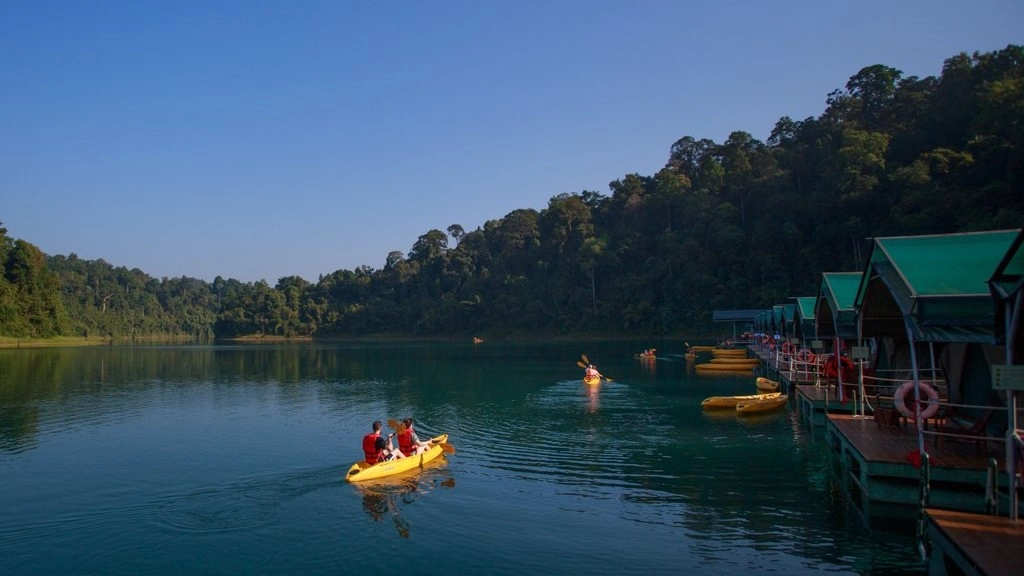
Khao Sok is one of Thailand’s most untouched areas, and the programme is built around it.
- Canoeing: guided river canoeing on the Sok River, or a paddle in your own canoe from the floating Lake Camp.
- Jungle and cave trekking: guided treks through the forest and into caves. Non-slip shoes are essential, and a small daypack covers the rest.
- Longtail boat cruises and swimming: out on Cheow Lan Lake, with early mornings the best time for wildlife. Life jackets must be worn whenever guests are in the water.
- Wildlife observation: guides help look for what lives in the forest, but sightings cannot be predicted at any time of year.
- Cooking: evening demonstrations at Khao Sok show how Thai dishes come together, while guests at The Bush Camp cook hands-on.
- Thai dancing shows: optional evening entertainment at The Bush Camp.
Beyond the activities, Elephant Hills also focuses on conservation and sustainability in Khao Sok:
- Conservation: wildlife monitoring and elephant conservation projects.
- Children: the Children’s Project supports rural education and teaches local children about nature.
- Sustainability: eco-friendly practices at both Khao Sok camps, from solar and wind power at the lake to refillable stainless steel bottles.
Is Elephant Hills Suitable for Families with Children?
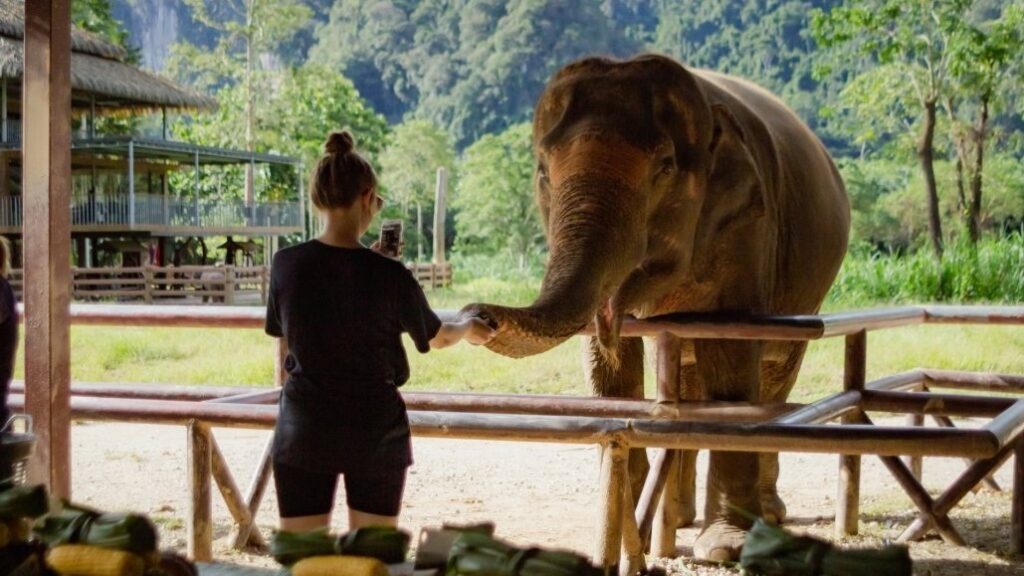
Yes, Elephant Hills is suitable for families with children, particularly at Khao Sok. Children are welcome from four years old at the Elephant Camp. Overnight stays at the floating Lake Camp start at seven, and children should be confident swimmers. Younger children can still see the lake on the day trip included in the three-day Jungle Safari.
Families get the most from the activities with three to four nights. Tents fit four, so two adults and two children can share, and a family of five usually takes two tents.
There is plenty to keep children engaged: time watching the elephants, canoeing, jungle treks on trails suited to all ages, and Thai cooking. Crafting stations for children are set up during festival periods. At The Bush Camp, children aged four and above are welcome, and the family rooms sleep two adults and three children.
Best Time to Visit Elephant Hills
Elephant Hills operates all year, and the best months depend on the camp.
Khao Sok: the Elephant Camp and Lake Camp
May and June are the recommended months, when the weather is comfortable. November to April is the dry season and May to October the rainy season, with September and October varying in how much rain falls. Even in the dry months, the rainforest sees brief, intense showers.
Khao Sok is one of Thailand’s wettest areas, with around 3,500 mm of rain a year, but showers usually last an hour or two. Activities continue unless there is serious flooding, and if there is, the camps offer alternatives such as painting. Daytime temperatures in the green season sit around 25 to 32°C, and prices are lower in May, June, September and October. A reusable poncho is all the rain gear needed.
Wildlife sightings cannot be predicted in any season. The camps sell out quickly during school holidays and other peak periods, and bookings open more than a year ahead, so speak to our travel specialists early if you are travelling at Easter, in summer or over Christmas.
Chiang Mai: The Bush Camp
Thailand’s cool season runs from mid-October to mid-February, the hot season from mid-February to mid-May, and the rains from mid-May to mid-October. Chiang Mai also has a seasonal smoke haze from crop burning, generally between February and April. GOV.UK notes that the haze can worsen bronchial, sinus or asthma conditions, so anyone affected may wish to check air quality and take advice before travelling.
How to Get to Elephant Hills
The Bush Camp is around two hours from Chiang Mai, with domestic flights to the city from both Phuket and Krabi, so pairing the north with a southern beach stay is straightforward. The Khao Sok camps are reached from the southern resorts, so a safari slots easily into a beach holiday in Khao Lak, Phuket or Krabi:
- Transfers: shared transfers run from Phuket, Krabi, Phang Nga, Khao Lak, Takua Pa and Samui. Hotel pick-ups are generally between 7 am and 9 am, and as early as 5:30 am from Koh Samui. Private transfers cost extra.
- Airports: Phuket and Krabi airports are about three hours from the camp. Shared airport transfers run at set times, suit morning arrivals, and only certain Phuket flights qualify. The shared return leaves at 2 pm, so evening flights home work best.
- Luggage: suitcases travel in the transfer vehicle, and guests moving on to the Lake Camp take an overnight bag only.
- Self-drive: guests are not permitted to arrive by self-drive.
Practical Tips for Elephant Hills
- Bring Thai baht in cash, around 2,000 to 3,000, with a few small notes for tips. There are no ATMs at the camps or the nearby markets, so it is best sorted before you arrive.
- Check the entry requirements on GOV.UK before you travel. As things stand, UK passport holders can visit Thailand for up to 30 days without a visa, but need to complete the Thailand Digital Arrival Card online first and hold a passport valid for at least six months.
- Keep your passport to hand, as it is needed at check-in.
- Take out personal travel insurance before you go, as it is required.
- Use the free Wi-Fi in the Elephant Camp’s common area, and charge your phone and camera there on the first night, because the Lake Camp has no Wi-Fi or phone signal.
- Leave the expensive jewellery at home.
- Pack sun cream from home, in SPF 25 to 50.
- Take a reusable poncho for the rain, and a small waterproof bag for canoe and boat trips.
What to Pack for Elephant Hills
Pack light and practical. Humidity, rain and mud are part of the experience, so quick-drying fabrics matter more than anything dressy.
Category | What to bring |
Clothing | Lightweight, breathable, quick-dry clothes that can get wet or muddy; long sleeves and long trousers for treks; a light jumper for cooler evenings; swimwear |
Footwear | Sturdy, non-slip walking shoes or sandals for trails, which can be slippery after rain; waterproof or quick-dry shoes for the elephant experience; flip-flops for camp |
Rain | A reusable raincoat or poncho. Disposable ones are sold at camp, but reusable is kinder to the forest |
Protection | Mosquito repellent, sun cream (SPF 25 to 50, best brought from home), a hat and sunglasses |
Trek daypack | A small backpack weighing no more than about 5 kg, holding water, phone, sunglasses, mosquito spray and sun cream. A small waterproof pack helps for canoe and boat trips |
Lake Camp | An overnight bag only, with two changes of clothes and toiletries. Larger luggage is left in storage |
Extras | Cash in baht, passport, camera, a book or cards for downtime |
Health, Safety and Accessibility at Elephant Hills
- Malaria: uncommon at the camps, but it is sensible to check travel health advice before you go.
- Water safety: life jackets must be worn whenever guests are in the water at the lake, and children must be seven or older to stay overnight at the Lake Camp.
- Medical help: facilities are 30 to 45 minutes from both camps, and the staff are trained in first aid.
- Insects: the Khao Sok tents have mosquito netting, and repellent plus long sleeves and trousers are advised for treks.
- Fitness: most guests can trek and canoe without difficulty. Those with back or knee problems may find trekking challenging, but can still enjoy the camp with a book or a game.
- Mobility: Elephant Hills states that the camps are not suitable for guests who are not fully mobile, which is worth raising before booking.
Plan Your Elephant Hills Stay
Elephant Hills slots neatly into almost any Thailand holiday, but the details matter: the right camp, the right season and the right number of nights for the people travelling. Luxtripper’s travel specialists work with Elephant Hills to plan your jungle stay around your travel dates, who you are travelling with and any beach stays before or after. From choosing the right camp to arranging transfers, they help make your holiday seamless. To begin planning, read our complete Elephant Hills guide for a wider overview.
Also Read: Best Places to See Elephants in Thailand | Best Time to Visit Thailand