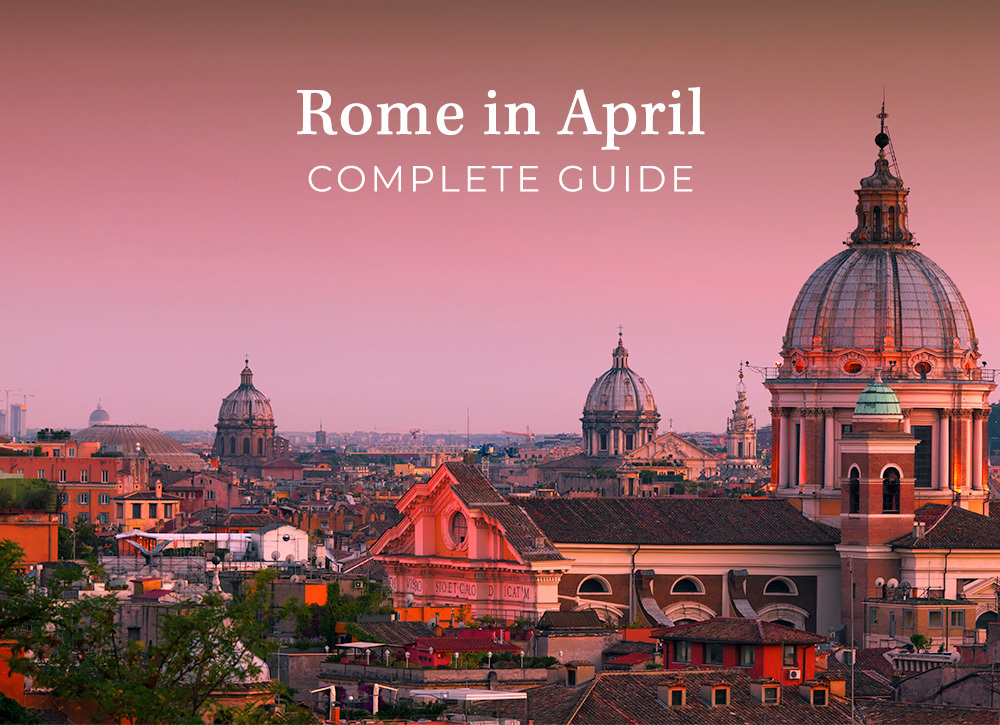
Rome isn’t just a city; it is a living timeline of human history. Famous as the Eternal City, it offers a rare chance to walk through 3,000 years of civilization in one trip. While captivating all year, Rome is truly magical in April. With flowers in bloom and comfortable temperatures between 12°C and 20°C, it is the best time to spend evenings at outdoor cafés and days exploring the UNESCO sites like the Colosseum, the Pantheon, and the Roman Forum.
However, there’s more to see than just the architectural marvels! The city feels alive with festivals, from Easter celebrations at the Vatican to exciting re-enactments of gladiator battles for Rome’s birthday. These cultural events, paired with blooming azaleas and seasonal flavours, make April the best time to cross Rome off your bucket list.
Is April a good time to visit Rome in 2026?
Yes, April is one of the most comfortable months to visit Rome. The city comes alive after winter and steps into the spring. With temperatures between 16°C and 20°C, the weather is comfortable and perfect for long sightseeing days without summer humidity.
Reasons why April is a good time include:
- Mild, sunny days are perfect for exploring the Colosseum and cobblestone alleys.
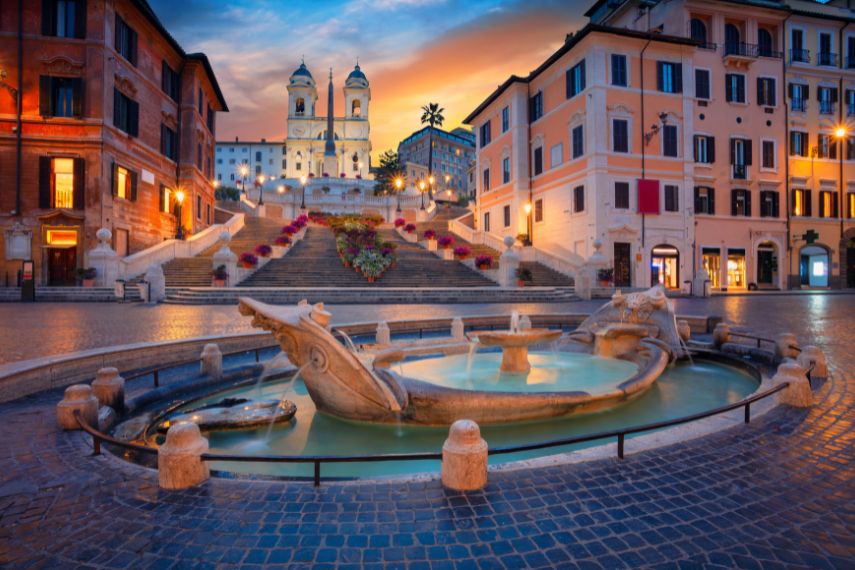
- You will witness Rome draped in fresh spring and vibrant greenery, including the fragrant Spanish Steps and the lush groves of Villa Borghese.
- It is the peak season to enjoy Roman artichokes on sun-drenched café terraces.
- Experience unique events like the Rome Marathon, Easter Papal Masses, and the city’s birthday (Natale di Roma).
- Longer days allow for sunset strolls and more time to capture the perfect golden-hour photos.
- While it is a popular shoulder season, it offers a sweet spot between manageable crowds and better travel deals before the July peak.
Weather in Rome in April 2026
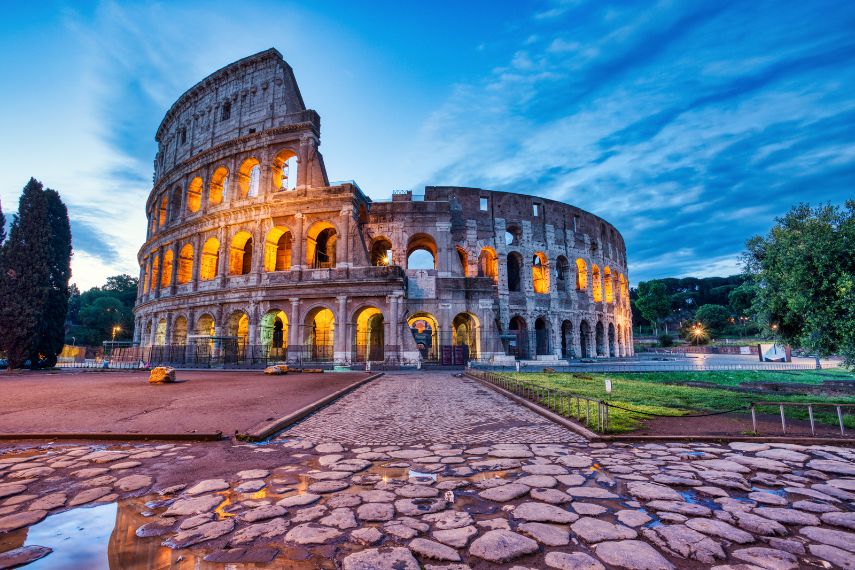
Rome in April is a spring dream, boasting around 13 hours of daylight at the start of the month to 14 hours of daylight towards the end with 7 hours of bright sunshine daily.
Temperature:
The city warms beautifully, with pleasant daytime highs of 16°C to 20°C. As the sun dips, evenings turn crisp, with temperatures cooling down to a chilly 8°C to 11°C.
Average Rainfall:
Expect a refreshing mix of skies; while sunshine dominates, April sees about 68mm of rain over 8 days to 13 showers. While showers are frequent, they are often brief and intermittent, quickly giving way to bright, blue Mediterranean skies.
What to Wear in Rome in April 2026
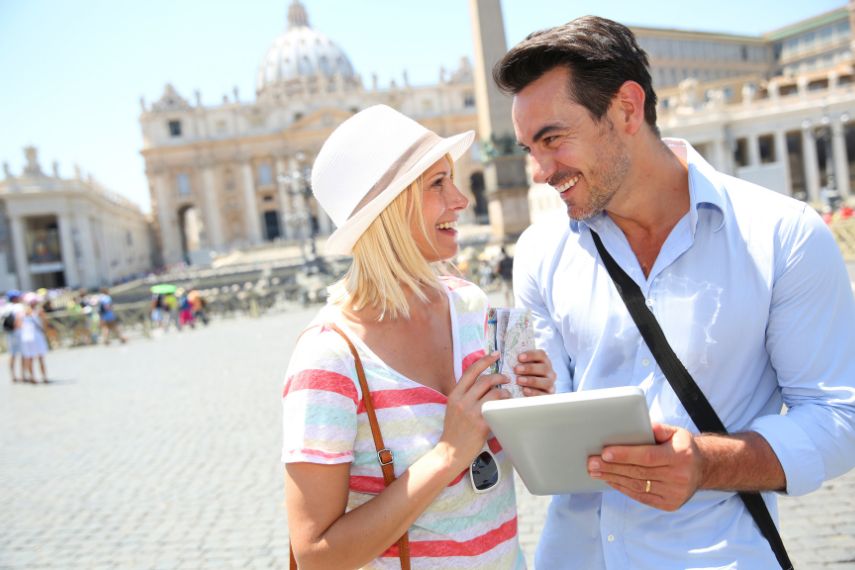
In April, go with a layering philosophy in Rome to match its shifting spring moods. Locals transition from dark winter tones to beige, taupe, and pastels, occasionally popping with vibrant reds or mustard yellows. Since you will navigate ancient cobblestones and sacred churches, your wardrobe must balance chic style with practical modesty.
For Women
You must opt for trench coats or light cardigans over cotton tops. While it is too cool for summer dresses, midi skirts with tights or tailored trousers are perfect. Always carry a silk or cashmere scarf, as it adds Italian flair and ensures your shoulders are covered when entering basilicas. If rain hits, make sure to swap your regular shoes with water-resistant ankle boots or leather sneakers.
For Men
Italian men favour polo shirts and light sweaters in earthy terracotta or navy. Swap heavy coats for denim or field jackets. It is best to avoid shorts and choose chinos or dark denim, as they look neat while still being comfortable for exploring ruins and going out to eat. For shoes, rubber-soled leather footwear is a great choice because it gives good grip on cobblestone streets, especially if it rains.
Time | For Men | For Women | Shoes |
Morning | Chinos & Long-sleeve Tee | Jeans & Trench Coat | Cushioned Sneakers |
Afternoon | Polo Shirt & Light Jacket | Midi Skirt & Scarf | Fashion Sneakers/Flats |
Evening | Dark Denim & Sweater | Trousers & Cardigan | Leather Boots/Loafers |
Rainfall | Waterproof Shell & Jeans | Raincoat & Tights | Grip-sole Boots/Leather Sneakers |
Visitor Arrivals: Is Rome Crowded During April?

Yes, Rome is undeniably crowded in April. It serves as the “high-shoulder” season, bridging the gap between the quiet winter (November–February) and the sweltering peak summer (June–August). While you won’t face the suffocating heat of July, you will encounter significant lines at the Vatican and Colosseum. April is often busier than March because of Easter pilgrims, school spring breaks, and the city’s birthday on April 21.
- April vs. Low Season: It is much busier than the peaceful, chilly months of January or February.
- April vs. Peak Season: It is slightly more breathable than August, but with similar crowds at major landmarks.
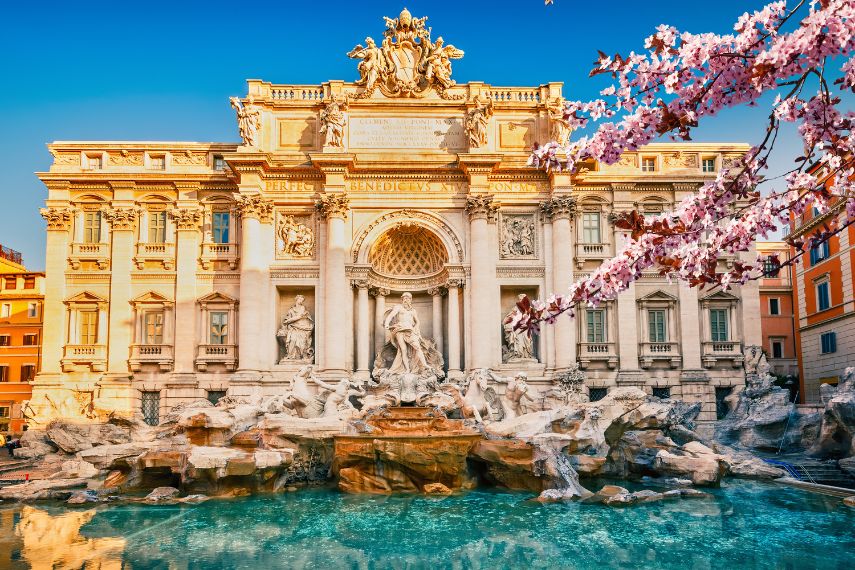
Pro-Tip: You can book tickets to famous attractions online and months in advance to skip waiting in the lines. Visit the Trevi Fountain at dawn to beat the rush!
Average Costs of a Trip to Rome in April 2026

In April 2026, a 7-day trip to Rome costs around £850 to £950 on average. This price is about 30% more expensive than the low winter season, but you will save about 15% to 20% compared to the peak summer high season.
Airfare
Budget options like Wizz Air from the UK start from £74, while Ryanair ranges between £83 and £90. For premium service, British Airways costs approximately £164, and ITA Airways is around £171. All these are non-stop flight options, usually taking between 2 hours 25 minutes and 2 hours 40 minutes to reach home.
Hotels and Resorts Prices
Accommodation costs depend entirely on your budget and location. Budget-friendly stays can be found for under £80 per night. Mid-range boutique hotels in trendy districts like Monti average between £120 and £240 per night. For premium luxury, choices exceed £320+ per night.
Transfers
The Leonardo Express Train is the fastest airport route at £15.10 (€17.90). Shuttle buses are the cheapest option at £5–£7.60 (€6–€9). Official taxis offer fixed rates of £42 (€50) from Fiumicino and roughly £30 (€35) from Ciampino. Private transfers start at £46 (€55), while Uber Black can range from £72 to over £110.
Things to Do in Rome in April

In April, Rome offers a well-rounded experience to travellers. You can step into history at the Gladiator School, ride a Vespa sidecar, or float in a hot air balloon. Thrill seekers can try canoeing on the Tiber River, e-biking the Appian Way, skydiving, paragliding, or handmade pasta making. Enjoy golf cart tours and sunsets at Castel Sant’Angelo, shop luxury fashion on Via dei Condotti, hunt vintage finds in Monti, explore catacombs, savour Mercato Centrale, and witness the moving Good Friday procession.
Things to Do in Rome in April | |
1. Train like a warrior at Gladiator School | 2. Fly over the countryside in a hot air balloon or paraglider |
3. Canoe on the River Tiber | 4. Ride an e-bike down the historic Appian Way |
5. Explore hidden alleys in a vintage Vespa sidecar | 6. Attend the Pope’s candlelit procession at the Colosseum |
7. Explore the spooky underground Roman Catacombs | 8. Walk through the famous rose gardens on Aventine Hill, or see the beautiful azaleas blooming on the Spanish Steps |
9. Learn to cook authentic pasta or pizza in a local class | 10. Shop for luxury brands on Via dei Condotti or find vintage treasures in the trendy Monti District |
Best places to visit in Rome in April

April offers a lovely time to wander through the Colosseum, Palatine Hill, and Roman Forum, with pleasant weather and none of the harsh summer heat. On April 21st, the city celebrates its birthday (Natale di Roma), often granting free access to these ancient marvels. Nature lovers should head to the Villa Borghese Gardens, where spring blossoms frame the world-class Galleria Borghese. For a spiritual and artistic journey, the Vatican Museums and the Sistine Chapel, and St. Peter’s Basilica are important spots. End your day in the ivy-clad streets of Trastevere, where the evening air is perfect for outdoor dining. Don’t forget to visit the Spanish Steps to see the azaleas in bloom and the Roseto Comunale (Aventine Hill Rose Garden) which opens in late April.
Tourist Attraction | Highlight | Entry Ticket |
Colosseum (UNESCO Site) | Ancient arena floor and gladiator training ruins | €18 (approx. ~£15–£16) |
Roman Forum (UNESCO Site) | The historic heart of ancient Roman political life | Included with Colosseum |
Vatican Museums and Sistine Chapel (UNESCO Site) | Michelangelo’s ceiling frescoes and the Raphael Rooms | €25 (approx. £21-£22) |
Trevi Fountain | Iconic Baroque design and the coin-toss tradition | €2 (approx. £1.74) |
St. Peter’s Basilica | Michelangelo’s Pietà and the massive papal dome | Free entry (fees apply for dome access and guided tours) |
Galleria Borghese | Art nestled in lush spring gardens | €16–€22+ (approx. £13.50–£18.50+) |
Roseto Comunale | Exclusive spring-only rose bloom | Free entry |
The Pantheon | Largest unreinforced concrete dome in the world | €5 (approx. £4.50); free on Free Museum Sunday |
Best Festivals to Attend in Rome in April 2026

April 2026 turns Rome into a vibrant festive stage. The month starts with the moving, candlelit Good Friday (3rd April) procession at the Colosseum, followed by the grand Easter Sunday (5th April) Pope’s Mass at the Vatican. On 21st April, the city celebrates its legendary birthday (Natale di Roma) with gladiator battles and ancient parades, while April 25th marks Liberation Day with national ceremonies. You can also catch the Vinitaly wine fair and local artichoke festivals throughout the region.
Festival Name | Location | Date (2026) |
Good Friday Processions (Via Crucis) | Colosseum | 3 April |
Easter Sunday (Papal Mass) | St. Peter’s Square | 5 April |
Easter Monday (Pasquetta) | Nationwide | 6 April |
Vinitaly Wine Festival | Verona | 7–9 April |
Natale di Roma (City Birthday) | Ancient City Centre | 21 April |
Artichoke Festival | Chiusure (Near Pienza) | 23–26 April |
Liberation Day | Rome (Via dei Fori Imperiali) | 25 April |
Where to Stay in Rome in April
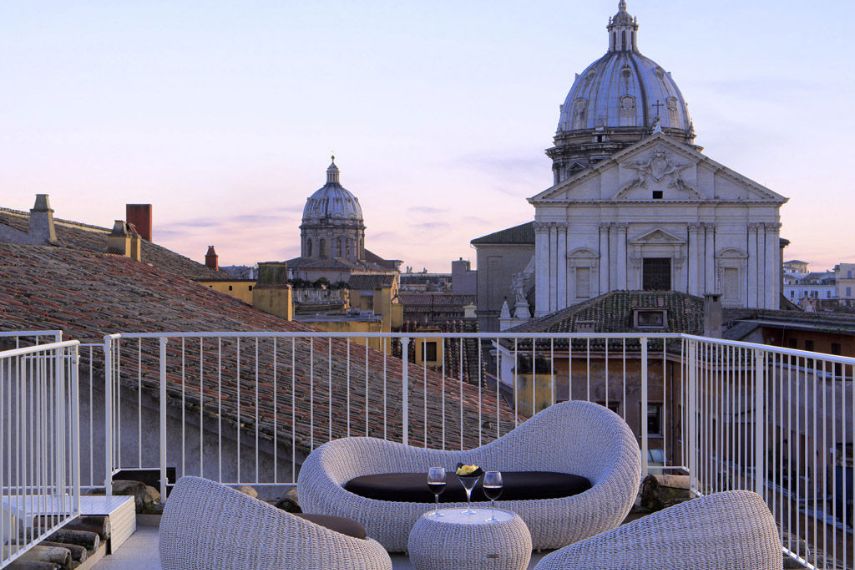
For first-time visitors to Rome, the Centro Storico is unbeatable for its torch-lit romance and close proximity to the Pantheon. Trastevere is perfect for those seeking authentic, bohemian nights and ivy-clad streets. If you prefer a quieter, sophisticated hub, Prati provides spacious, family-friendly avenues near the Vatican with excellent high-end shopping. Monti remains the best trendy choice for hip cafés tucked between the Colosseum and Termini. Choosing these districts in April ensures you are perfectly positioned for massive sightseeing.
Neighbourhood | Best For | Recommended Hotels |
Centro Storico (Historic Centre) | Easy walkability, iconic architecture | Palazzo Navona Hotel |
Trastevere | Nightlife and authentic local culture | Relais Le Clarisse a Trastevere |
Prati/Vatican | Quiet, upscale, and family-friendly | Grand Hotel Tiberio, NH Collection Roma Giustiniano |
Monti | Hip boutiques and Colosseum views | The Balmoral, a Rocco Forte hotel, The Rome Times Hotel |
River Area | Modern design and easy river walks | Bvlgari Hotel Roma, Palazzo Dama |
Pomezia | Budget-friendly | Simon Hotel |
Garbatella | Authentic, quiet Roman village experience | Hotel Caravel Roma |
What to Eat in Rome in April 2026
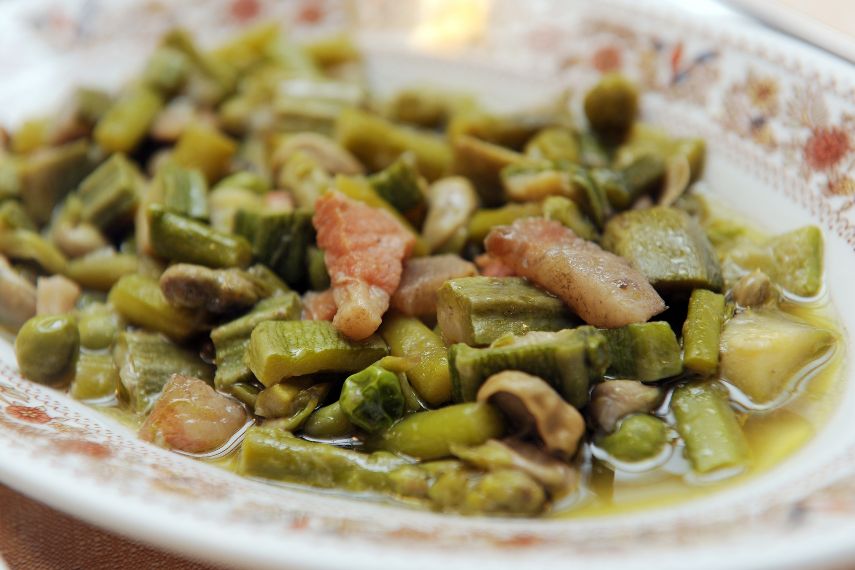
In April, Rome’s culinary scene is centered on the legendary artichoke. This is the peak of the Carciofo Romanesco season. Besides artichokes, spring brings a lighter touch to Roman kitchens with fresh fava beans, peas, and tiny wild strawberries (fragoline). Easter also introduces the festive treats like the dove-shaped Colomba cake and savoury Abbacchio (spring lamb). It is the perfect month to enjoy fresh, seasonal flavours on a sunny outdoor terrace.
Dish | Description | Best Places to Try |
Carciofi alla Giudia | Deep-fried artichokes | Da Giggetto al Portico d’Ottavia (Jewish Ghetto), Nonna Betta (Jewish Ghetto) |
Carciofi alla Romana | Artichokes braised with garlic and herbs | Armando al Pantheon, Piperno (Jewish Ghetto) |
Carbonara | Spaghetti pasta with pancetta, eggs, and a touch of guanciale | Roscioli Salumeria con Cucina (Via dei Giubbonari) |
Vignarola | A stew of artichokes, fresh fava beans, peas, lettuce, and savoury guanciale | Nino (near Piazza di Spagna) |
Abbacchio a Scottadito | Grilled lamb chops, traditionally eaten on Easter | Checchino dal 1887 (Testaccio) |
Fragoline di Bosco | Sweet, wild strawberries served with lemon or mascarpone cream | Panificio Mosca (Prati) |
Cacio e Pepe | Thick pasta with sharp Pecorino Romano and toasted black pepper | Felice a Testaccio |
Colomba Pasquale | Dove-shaped sweet bread, served during Easter | Casa Manfredi (Viale Aventino) |
What to Pack in Rome in April

Packing for Rome requires more than just smart layering options in clothes. Since the spring sun is brightening, sunglasses and a reusable water bottle for the city’s free fountains are important. To pass through the crowds easily, a crossbody bag is your most suitable choice. Don’t forget an umbrella for those sudden showers. Carry a power bank to keep your maps running. Always carry your passport, cash/cards, and identity card along with you.
Category | Must-Have Items |
Documents | Passport, Travel Insurance, Cash/Cards, Original ID |
Daily Gear | Crossbody Bag, Travel Umbrella, Reusable Bottle |
Toiletries | Conditioner, Shaving Kit, Dental Kit, Sunscreen |
Health | Personal Medicines, Basic First Aid, Blister Plasters |
For Kids | Stroller (for cobblestones), Detangler, Baby Carrier |
Hacks & Tips to Visit Rome in April 2026
- All state-owned sites (Colosseum, Castel Sant’Angelo) are free on the first Sunday of the month.
- The Vatican Museums are free on the last Sunday of the month (9:00 AM – 12:30 PM).
- Never buy bottled water. Use the nasoni (curved iron fountains) for safe drinking water.
- Drink your espresso standing at the bar. If you sit at a table (al tavolo), the price can triple due to service fees.
- Bread at restaurants is rarely free. If you don’t touch it, tell the waiter so they remove the charge from your bill.
- Order house wine (Vino della Casa). It is high quality, locally sourced, and significantly cheaper than bottled wine.
- Most museums in Rome are closed on Mondays. You can visit the Vatican, as it stays open.
- Arrive at the Trevi Fountain before 7:00 AM to get photos without the thousands of tourists.
- Pre-book tickets for the Vatican and Colosseum at least 3-4 weeks in advance.
- You must stamp your bus/metro ticket in the yellow/green machines. A ticket that is purchased but not stamped results in a €50+ (approx. £43) fine.
- Buy bus/metro tickets from Tabaccheria (Big “T” Signs). Drivers do not sell them on the bus.
- Avoid Bus 64 (Termini to Vatican) if possible; it is famous for pickpockets. Use the Metro (Line A to Ottaviano) instead.
- Between 7:00 PM and 9:00 PM, pay for a drink and get access to a buffet. It is a Roman “Happy Hour” that can replace dinner.
- Romans eat late. Most authentic trattorias don’t open until 7:30 PM or 8:00 PM.
- Ordering a Cappuccino after lunch is considered a major faux pas. Stick to Caffè (Espresso) or Macchiato.
- While cards are widely accepted, small gelato shops and family trattorias often prefer (or only accept) cash.
- Italy uses Type C, F, and L plugs. Bring a universal adapter that fits the 3-pin linear “L” socket.